
Address
P.O. Box. 29304, San Jose, CA 95123
 Comprehensive
Cancer Consultation Intake Form
Comprehensive
Cancer Consultation Intake Form



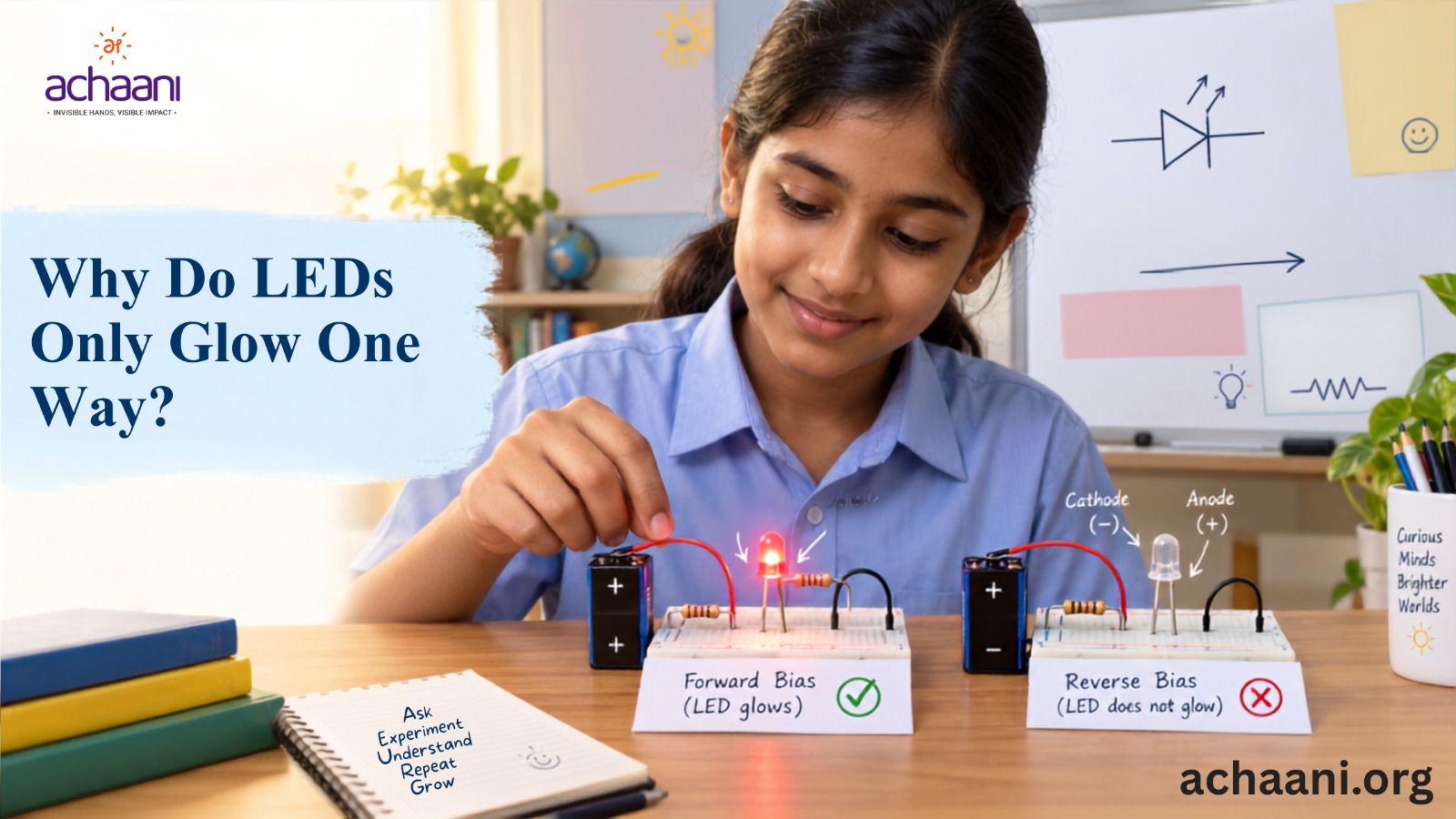
Have you ever connected a component and wondered why it did not work even when everything looked right? In electronics, the direction you connect something can change everything. And that one idea is what this Basic Electronics Experiment helps students discover.
In the 1920s, a young radio technician named Oleg Losev noticed something unusual. When electricity flowed through a tiny crystal in one direction, it produced a small green light. When he reversed the connection, the light disappeared.
That simple observation led to the discovery of the world's first LED long before scientists fully understood how it worked. Paying attention to small details leads to big discoveries — the same kind of curiosity behind how tiny antibody medicines are fighting disease today.
Source: https://en.wikipedia.org/wiki/Oleg_Losev
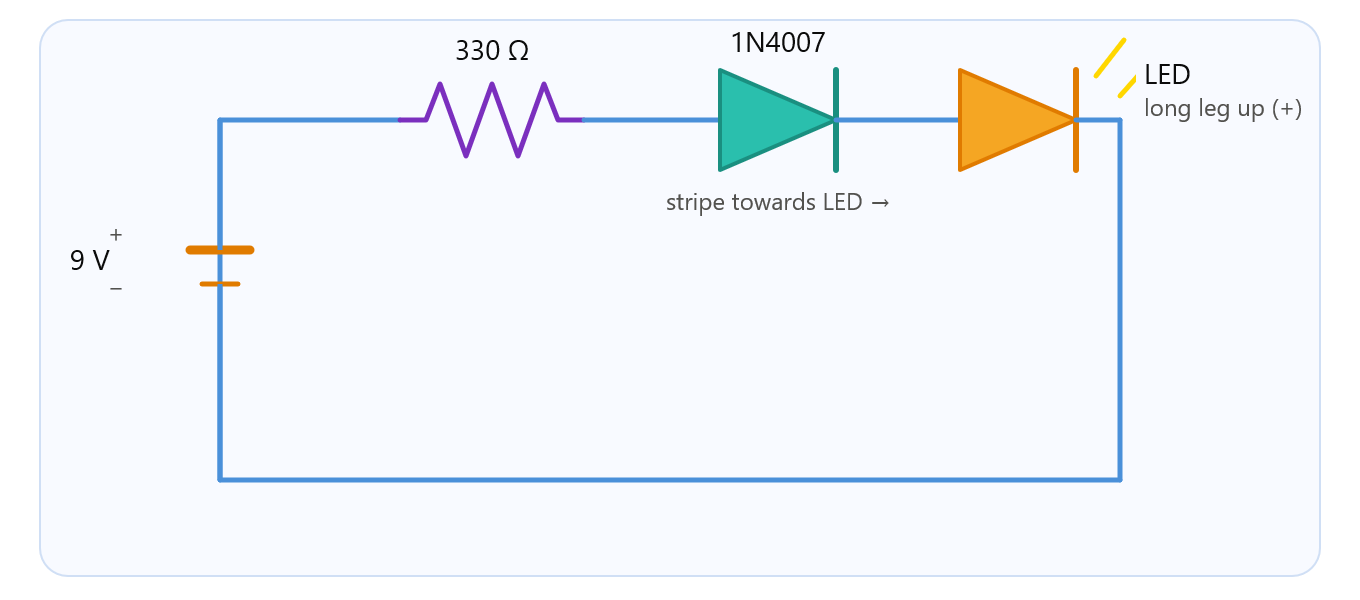
In Basic Electronics Experiment, every electronic component belongs to one of two families:
The "don't care" family—Resistors, plain wires, and switches. Flip them any way you like — nothing changes!
The "one-way" family— LEDs, diodes, batteries, and capacitors. These are built differently on each end, so direction really matters. Connect them backwards and nothing works the component may even get damaged.
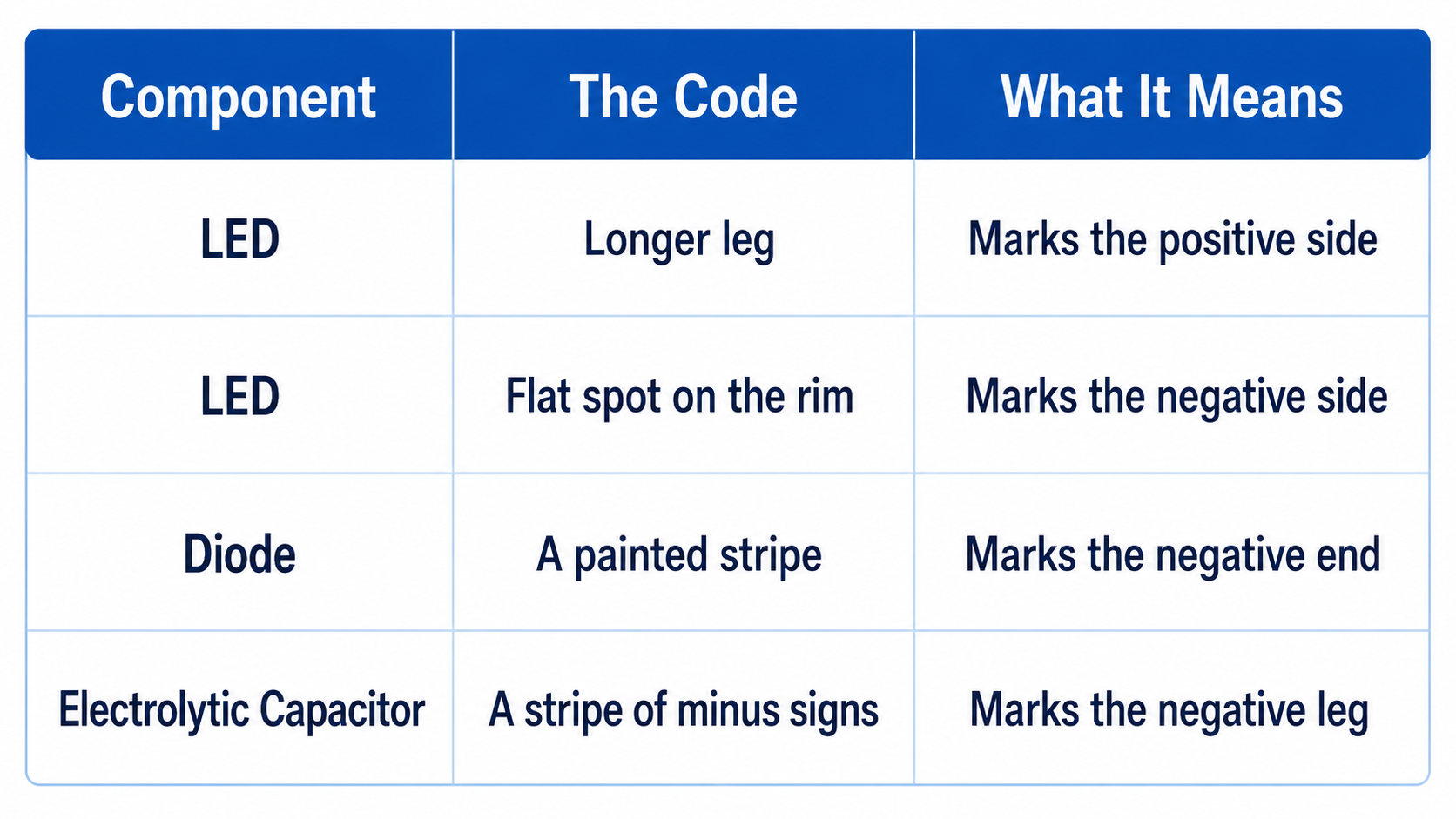
Only electrolytic capacitors are polarised — ceramic capacitors do not have a positive or negative side.
Engineers joke that every component holds "magic smoke" let it escape and it stops working forever.
Connecting a component the wrong way can permanently damage it.
That is why students explore polarity safely in our experiments first.
Polarity is not just a science concept. It is built into everyday technology battery compartments, TV remotes, LED lights, and countless electronic devices all rely on correct direction.
Once students understand this through a Basic Electronics Experiment, they begin to notice it everywhere. Curious to test more components? Try learning how to use a digital multimeter to check polarity and connections for yourself.
Every great discovery started with one small observation. This is where that habit begins. And for students who want to dig a little deeper into anode, cathode, and how current actually decides which way an LED lights up, SparkFun's guide to how LEDs work is a great next stop.
