
Address
P.O. Box. 29304, San Jose, CA 95123
 Comprehensive
Cancer Consultation Intake Form
Comprehensive
Cancer Consultation Intake Form




Imagine trying to write the number "220" on something as tiny as a grain of rice. Now imagine making sure it never fades, even after getting hot. Sounds impossible, right? That's exactly the challenge electronics engineers faced many years ago. Their clever solution became the resistor color code, a simple system that's still used on resistors today. Let's find out how those tiny coloured bands became a code that anyone can learn to read.
Every colored band on a resistor stands for a digit. Reading the colours in order helps you decode its exact value.
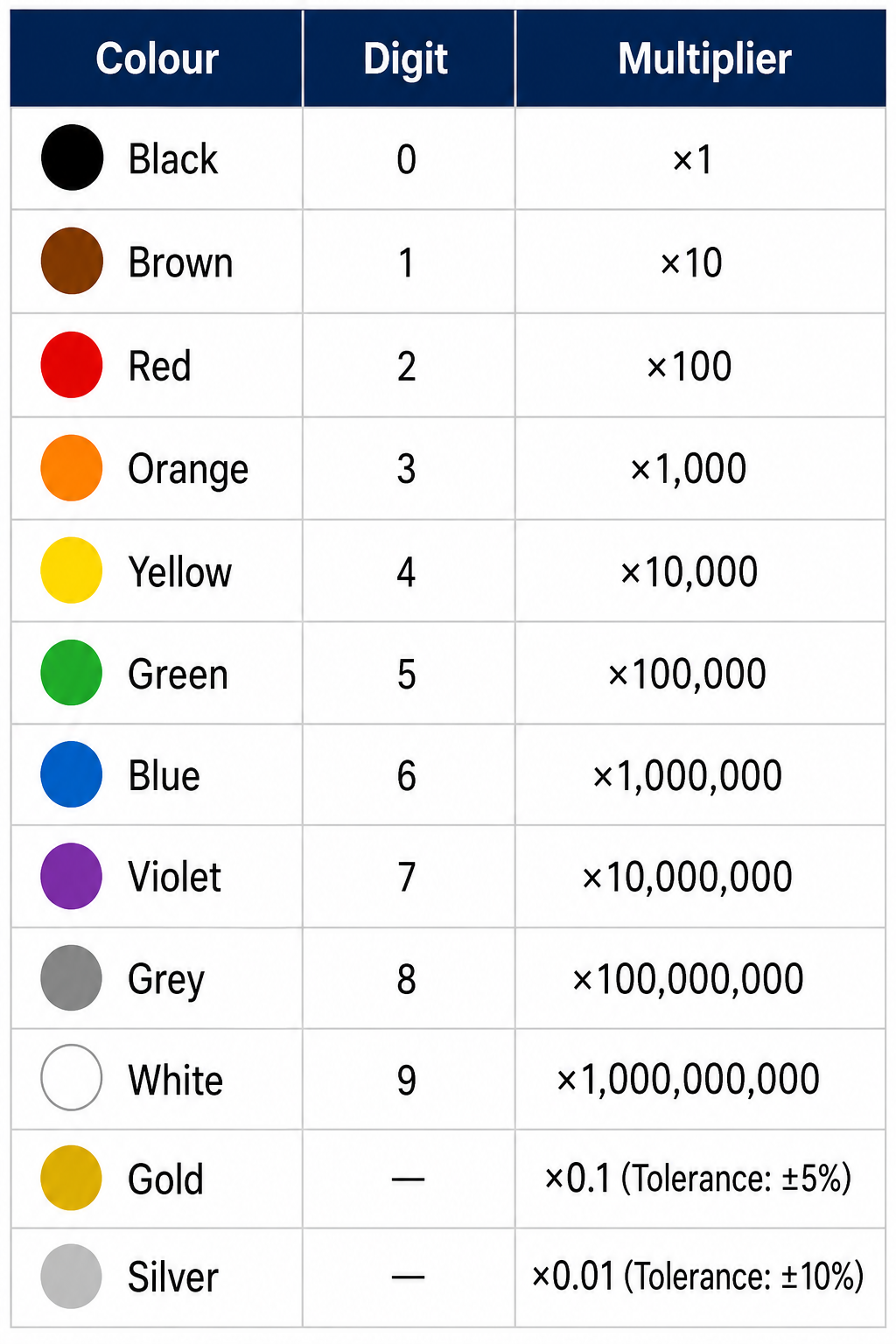
"B.B. ROY of Great Britain had a Very Good Wife "
To remember the resistor color code, many students use a simple memory trick. It helps to remember the colours from Black to White, representing the numbers 0 to 9.
Reference: https://www.allaboutcircuits.com/textbook/reference/chpt-2/resistor-color-codes/
A real electronics technician begins by reading the resistor, not by picking up a tool. Knowing how to read resistors helps identify whether a component is working as expected. Students can also learn why LEDs glow only in one direction to understand how different electronic components behave.
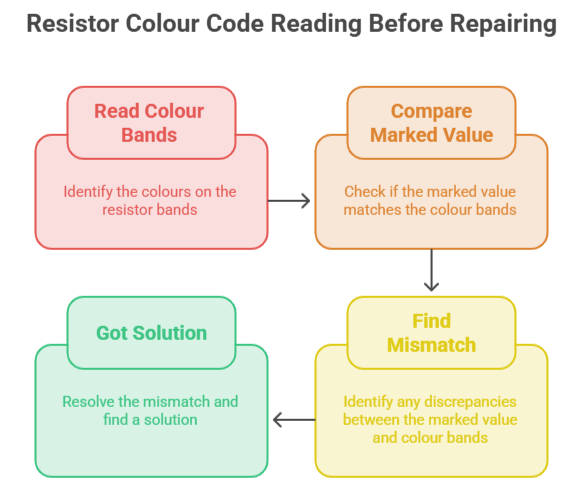
The colour codes aren't limited to science labs. They're found inside chargers, radios, televisions, toys, and many other electronic devices. Through hands-on applied science workshops for students, children can explore these components by building, testing, and observing real circuits. That’s what makes Electronics for Kids so exciting.
Every small component has a story to tell. Keep exploring, observing, and discovering the world of electronics! For further learning, explore The Open University’s guide to colour coding and standard resistor values
